

Most invasive plants in North America are non‑native species introduced accidentally through contaminated crop seed or intentionally for agricultural, medicinal, or ornamental use. One reason these plants thrive is because they arrive without their natural enemies—such as insects and pathogens—that regulate populations in their native ranges. This theory is known as the Enemy Release Hypothesis.
WHAT BIOCONTROL IS
Classical weed biological control (biocontrol) involves introducing a weed’s natural enemies to reduce its growth or reproduction. Weed biocontrol is regulated in North America, and only carefully tested, host‑specific biocontrol agents are approved. These agents may attack a weed’s flowers, seeds, roots, leaves, or stems, weakening the weed and helping native or desirable plants compete more effectively.
WHAT BIOCONTROL ISN'T
Other forms of biological control exist, such as augmentative biocontrol, which is commonly used to manage agricultural pests. Many misconceptions surround classical biological control. For example, the introduction of the Javan mongoose in the Caribbean or the cane toad in Australia were disastrous actions that wreaked havoc on native animals. However, these cases have nothing to do with the discipline of true classical biological control, which relies on rigorous testing to ensure released agents are highly host‑specific and attack only the target weed.
History of weed biocontrol
Classical weed biocontrol began in the mid‑1800s with the release of scale insects to control invasive cacti in India. Since then, more than 540 biocontrol agents have been released against 230 weed species in 97 countries. In the United States and its overseas territories, weed biocontrol started in 1902, and by 2025, 218 agents had been introduced to manage 84 weed species.
Beginning in the 1940s, weed biocontrol in the continental United States was regulated under the Plant Quarantine Act of 1912, which required testing agents for their safety to economically important crops. With the passage of the Endangered Species Act in 1973, protection goals expanded to include native plants, particularly rare and threatened species. This shift transformed host‑testing from a narrow exclusionary approach to one focused on estimating an agent’s host range and predicting risk to untested species. The centrifugal testing method described by Wapshere in 1974 (testing plants at various taxonomic distances from the target weed) became central to this effort. Continued advances have emphasized host preference and the role of visual and olfactory cues in guiding insects to specific plants for oviposition, development, and feeding.
How safe is weed biocontrol?
True classical weed biocontrol requires several years of rigorous testing to ensure agents are host‑specific. While some early releases were inadequately vetted and later found to attack non‑target plants, modern regulations, strict pre-release testing, best‑practice guidelines, and improved post‑release monitoring have greatly reduced such risks.
There are many misconceptions about weed biocontrol. Commonly cited ecological disasters, such as the introduction of the Javan mongoose or cane toad, had nothing to do with the discipline of classical weed biocontrol. See the FAQ section for additional discussions pertaining to the safety of classical weed biocontrol.
Permitting Process
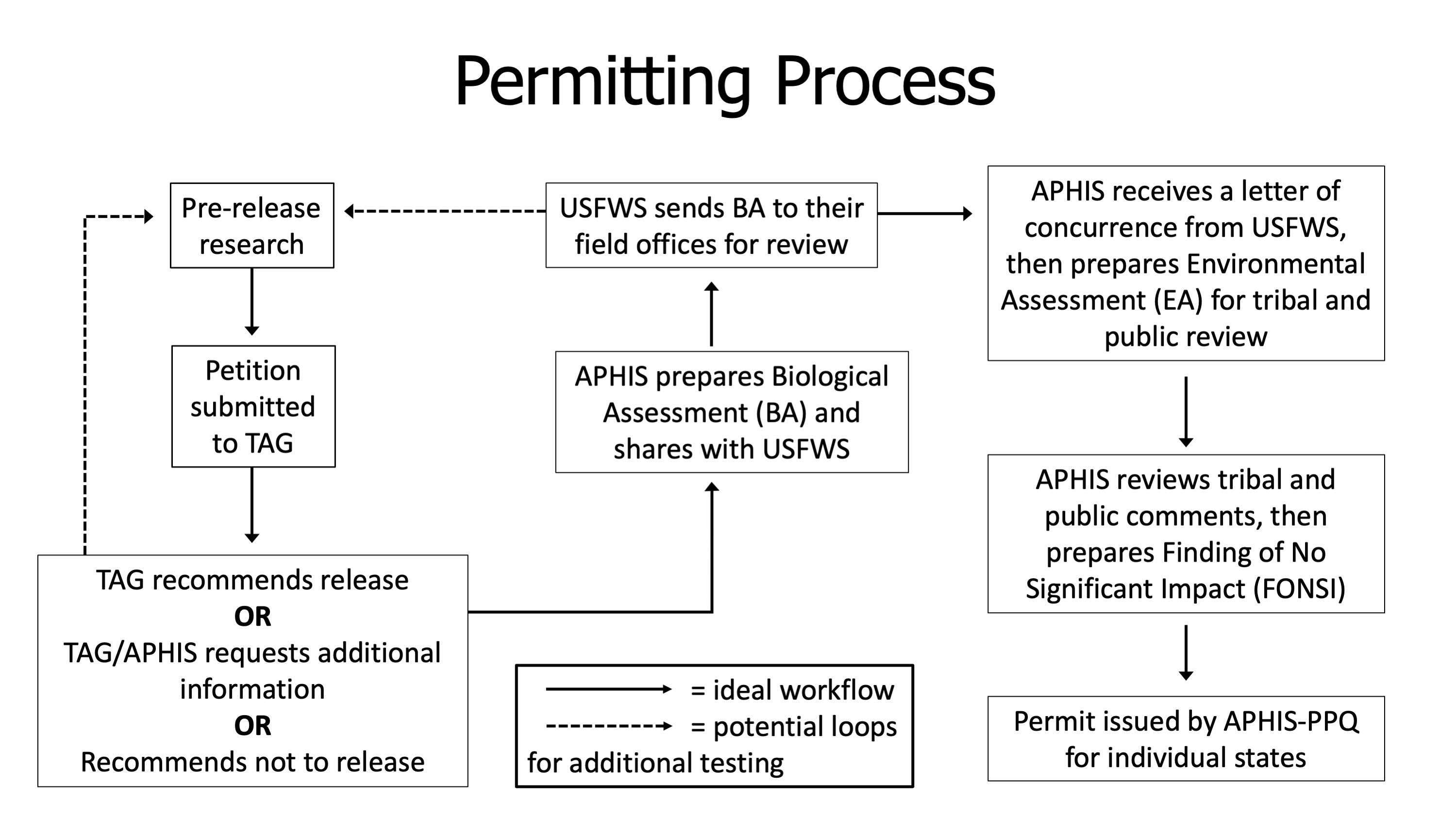
In the United States, the USDA Animal and Plant Health Inspection Service–Plant Protection and Quarantine (USDA APHIS PPQ) regulates testing guidelines and authorizes the importation of weed biocontrol agents, while the Canadian Food Inspection Agency (CFIA) fulfills the same role in Canada. The Technical Advisory Group (TAG), composed of U.S. federal agencies and regulatory counterparts from Canada and Mexico, reviews petitions for new biocontrol agents and advises APHIS on their safety and potential impacts. Researchers work closely with APHIS and TAG to assess environmental risks, and some U.S. states require additional approval processes for field release. In Canada, the Biological Control Review Committee (BCRC) reviews petitions to CFIA and APHIS for compliance with NAPPO standards (the North American Plant Protection Organization’s Regional Standards for Phytosanitary Measures). BCRC findings contribute to TAG recommendations, and APHIS and CFIA coordinate decisions when releases are proposed in both countries.
Code Of Best Practices
International Code of Best Practices for Classical Biological Control of Weeds
- Ensure that the target weed’s potential impact justifies release of non-endemic biocontrol agents
- Obtain multi-agency approval for biocontrol target
- Select biocontrol agents with potential to control target
- Release safe and approved biocontrol agents
- Ensure that only the intended biocontrol agent is released
- Use appropriate protocols for release and documentation
- Monitor impact on the target
- Stop releases of ineffective biocontrol agents or when control is achieved
- Monitor impacts on potential nontargets
- Encourage assessment of changes in plant and animal communities
- Monitor interaction among biocontrol agents
- Communicate results to public
Is classical weed biocontrol appropriate for your infestation?
Biocontrol is just one of several weed management options, alongside chemical, physical, and cultural controls. The most effective approach depends on the severity of the infestation, management goals, and available resources. Choosing biocontrol requires considering factors such as the infestation’s location and characteristics, the target weed, available biocontrol agents, and the time and resources you can commit to management.
Below are questions you should ask before you begin a biocontrol program:
Is the target infestation suitable?
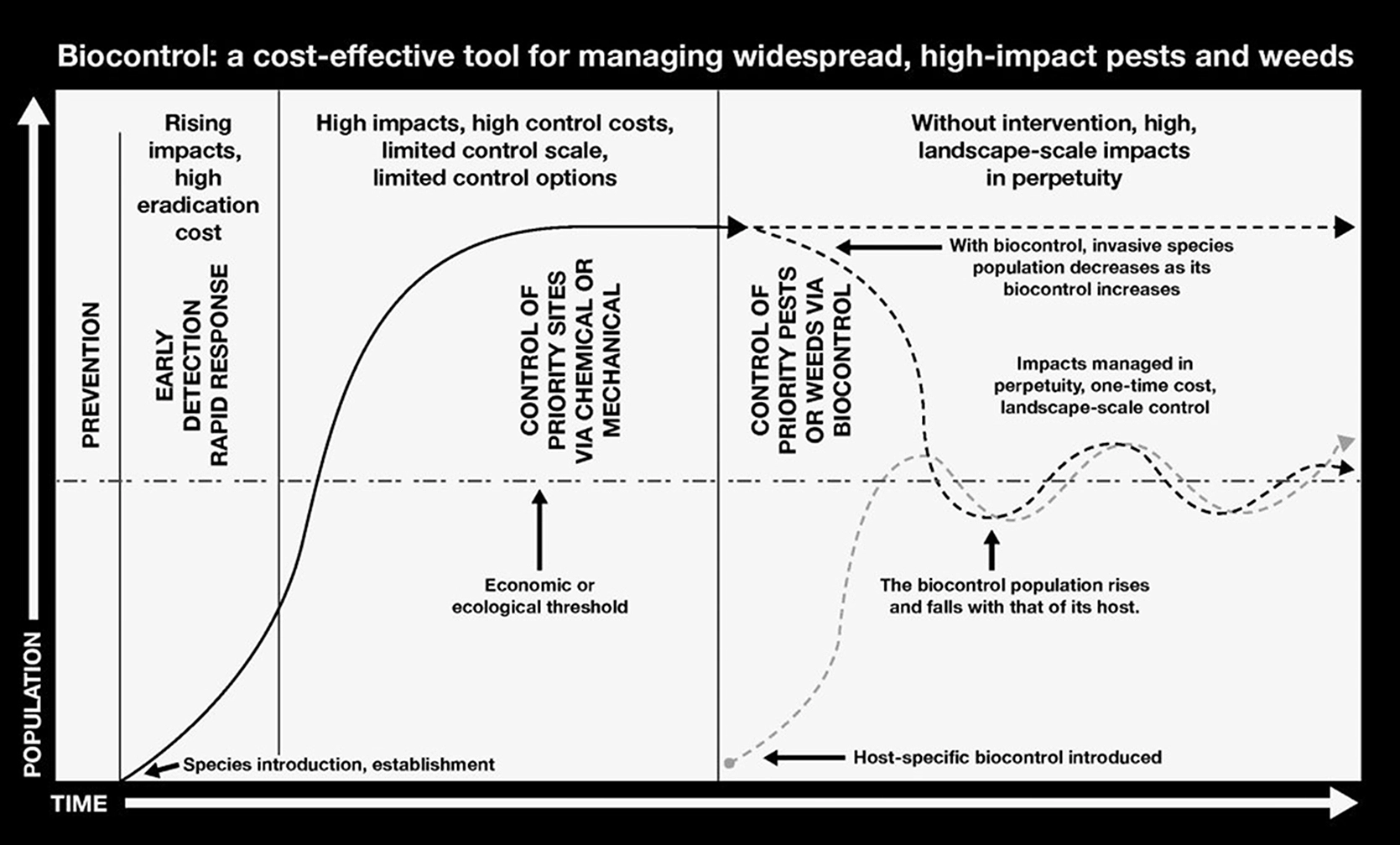
The invasion curve diagram illustrates the stages of invasion typical for many invasive species. Early populations often begin small before gradually, or sometimes rapidly, expanding. Control efforts are most effective in the early stages, when populations are limited and eradication is still possible.
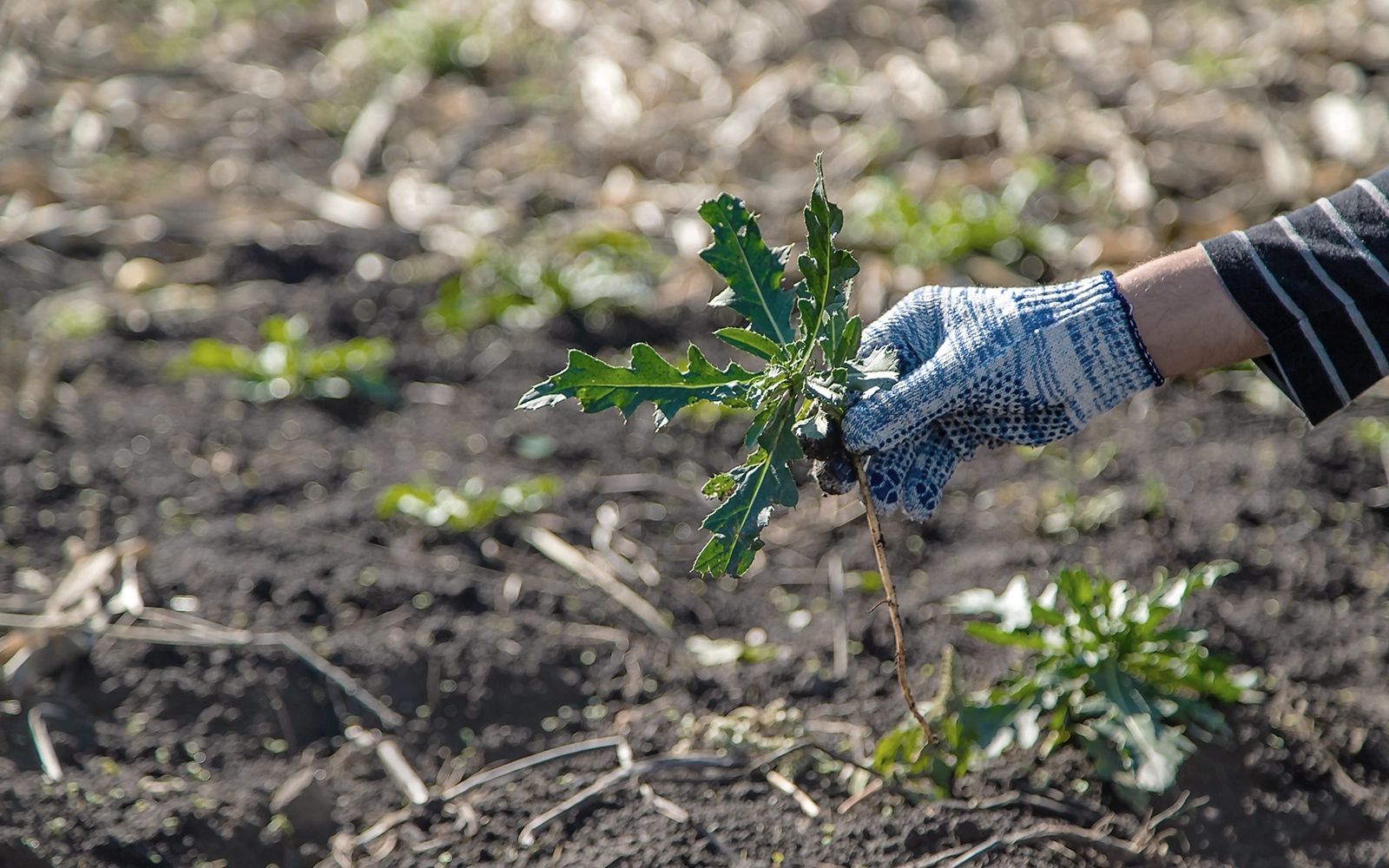
Because biocontrol takes time and does not eradicate weeds, it is not a recommended management option during the early stages of plant invasion. For small, newly established populations, rapid methods such as hand‑pulling or herbicide spot‑spraying (followed by monitoring and retreatment) are more effective at achieving eradication and preventing spread, especially in high‑priority areas like travel corridors. Biocontrol is best suited to later invasion stages, where infestations are widespread (at least ¼ acre / 0.1 ha), access or funding is limited, or other control methods are unsuitable, such as in inaccessible or sensitive habitats.
Are approved and effective biocontrol agents available?
Because developing and approving biocontrol agents is so costly and complex, many weeds lack approved biocontrol agents. Even when agents are available, they may not suit your climate or situation. Contact a local biocontrol specialist or consult this website’s Biocontrol Agent or Resources pages to determine which agents are approved and appropriate for your location.
How soon can I expect to see results?
Biocontrol takes time to show results. Establishment typically takes 1–3 years, and meaningful weed suppression may take much longer—sometimes 5–30 years to reach full management potential.
Is the weed the problem, or a symptom of the problem?
Weed infestations often result from disturbance of plant communities. Without restoring a resilient, desirable plant community—and if disturbance continues—biocontrol alone is unlikely to be effective.
An effective biocontrol program:
- Is based on an understanding of the target weed, habitat, land use, and management objectives
2. Is part of a broader integrated pest management program
3. Uses biocontrol only when it is the best option
4. Sets realistic goals and timelines
5. Includes sufficient resources for monitoring weeds, surrounding vegetation, and biocontrol agent populations
When biocontrol is deemed appropriate, success depends on selecting suitable release sites and agents, properly obtaining and releasing agents, and monitoring outcomes. Familiarity with these steps improves implementation and effectiveness; each is covered in the Components of Weed Biocontrol section of this website.
What should you expect with weed control?
The success of weed biocontrol depends on how land managers define success, which varies by location and project goals. Some biocontrol efforts have produced dramatic results; for example, releases of the beetle Mecinus janthiniformis in the 1990s brought most Dalmatian toadflax infestations in western North America under control within two decades.
Such outcomes are uncommon, however, and some biocontrol agents have had limited impact. Programs are typically considered successful when weeds persist but are reduced below acceptable economic or ecological thresholds.
Ideal Results
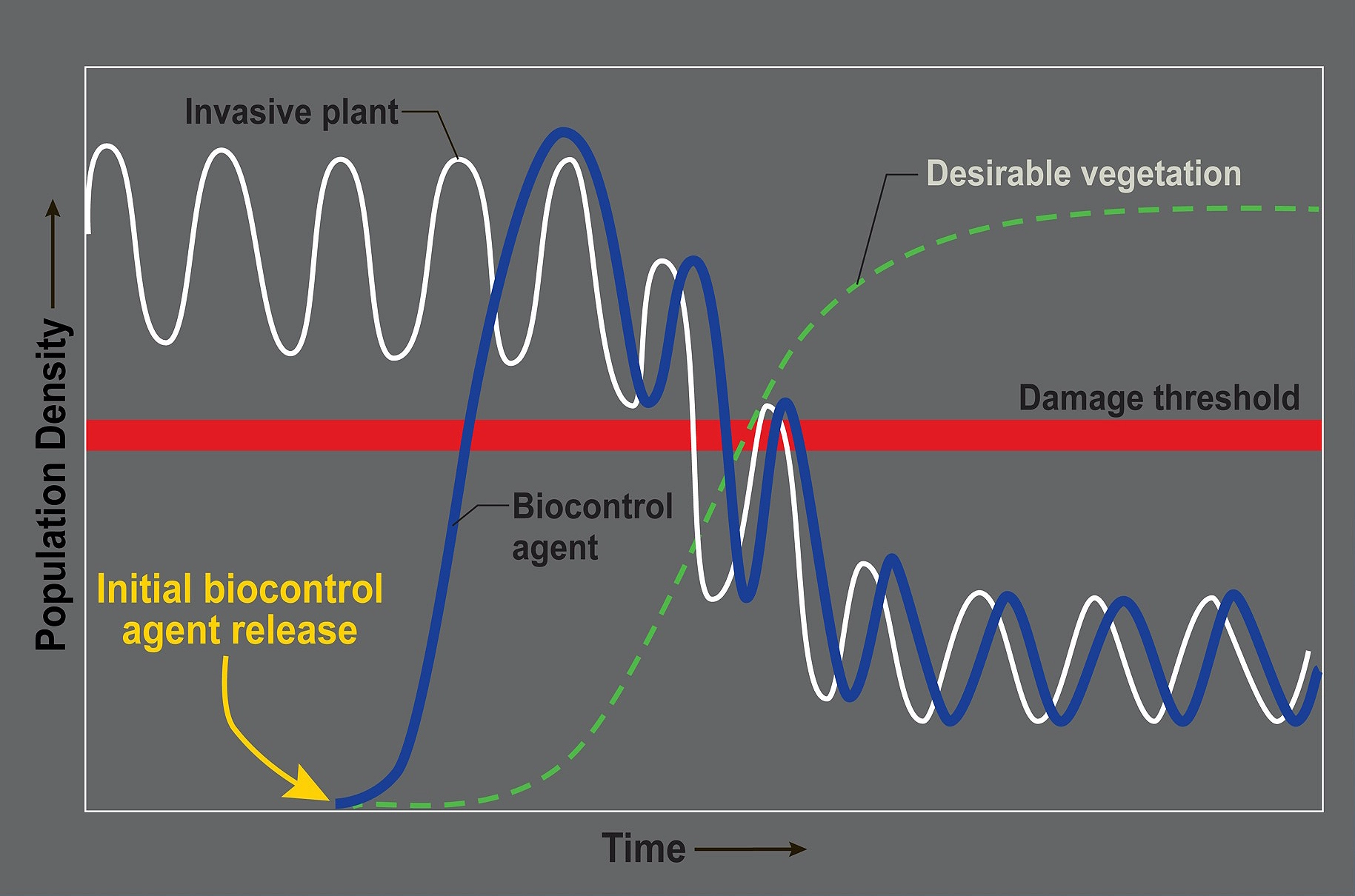
Target weed populations naturally fluctuate, but originally these fluctuations are above the damage threshold where they cause economic and ecological harm. When biocontrol is successful, agent populations increase and suppress the weed below the damage threshold. As weed levels decline, agent populations also decrease due to limited resources or dispersal. Many systems show repeated fluctuations until both populations stabilize at low levels. Biocontrol agents usually take 1–3 years to establish, and significant weed suppression may take much longer—sometimes 5–30 years—to reach full management potential.
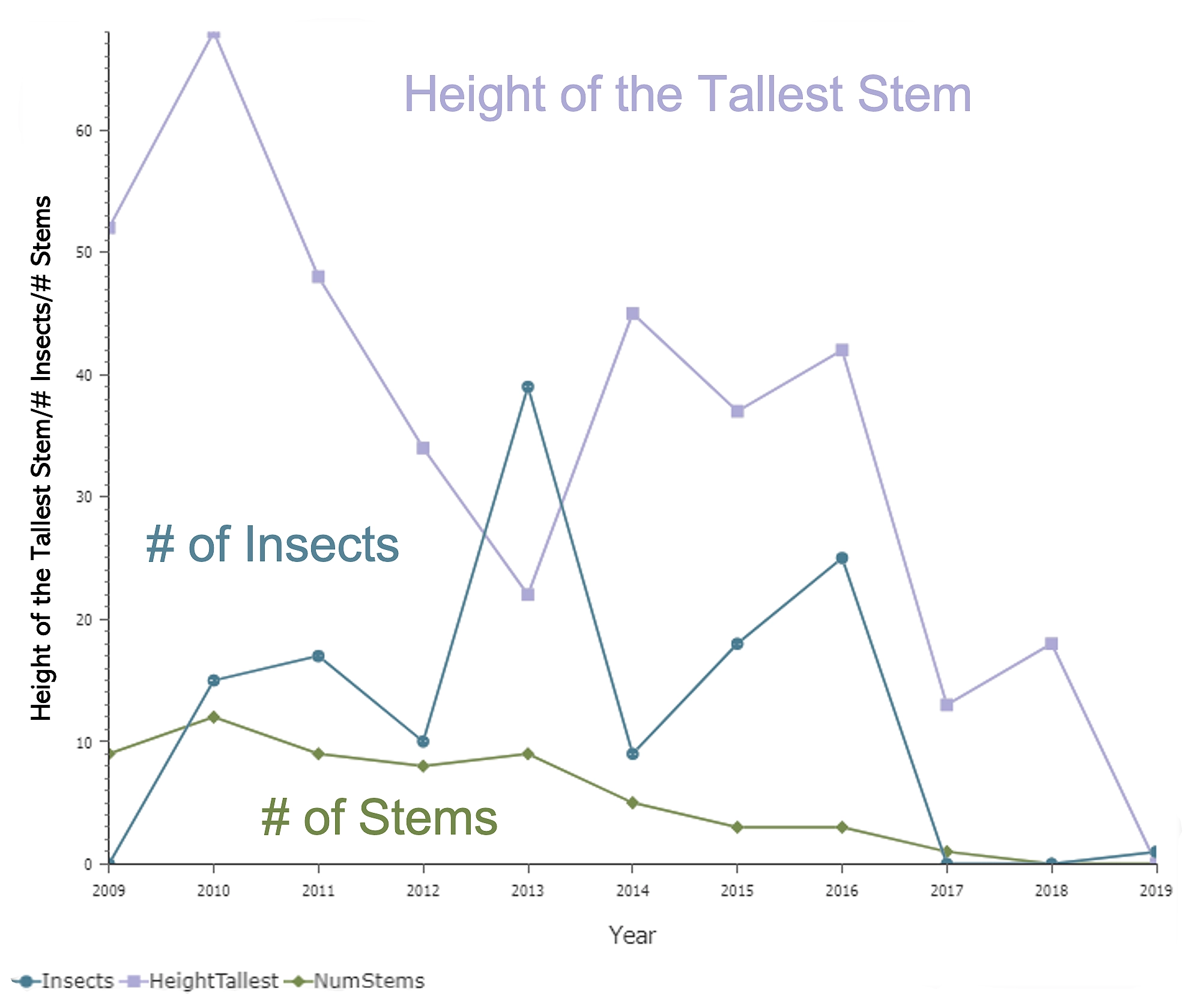
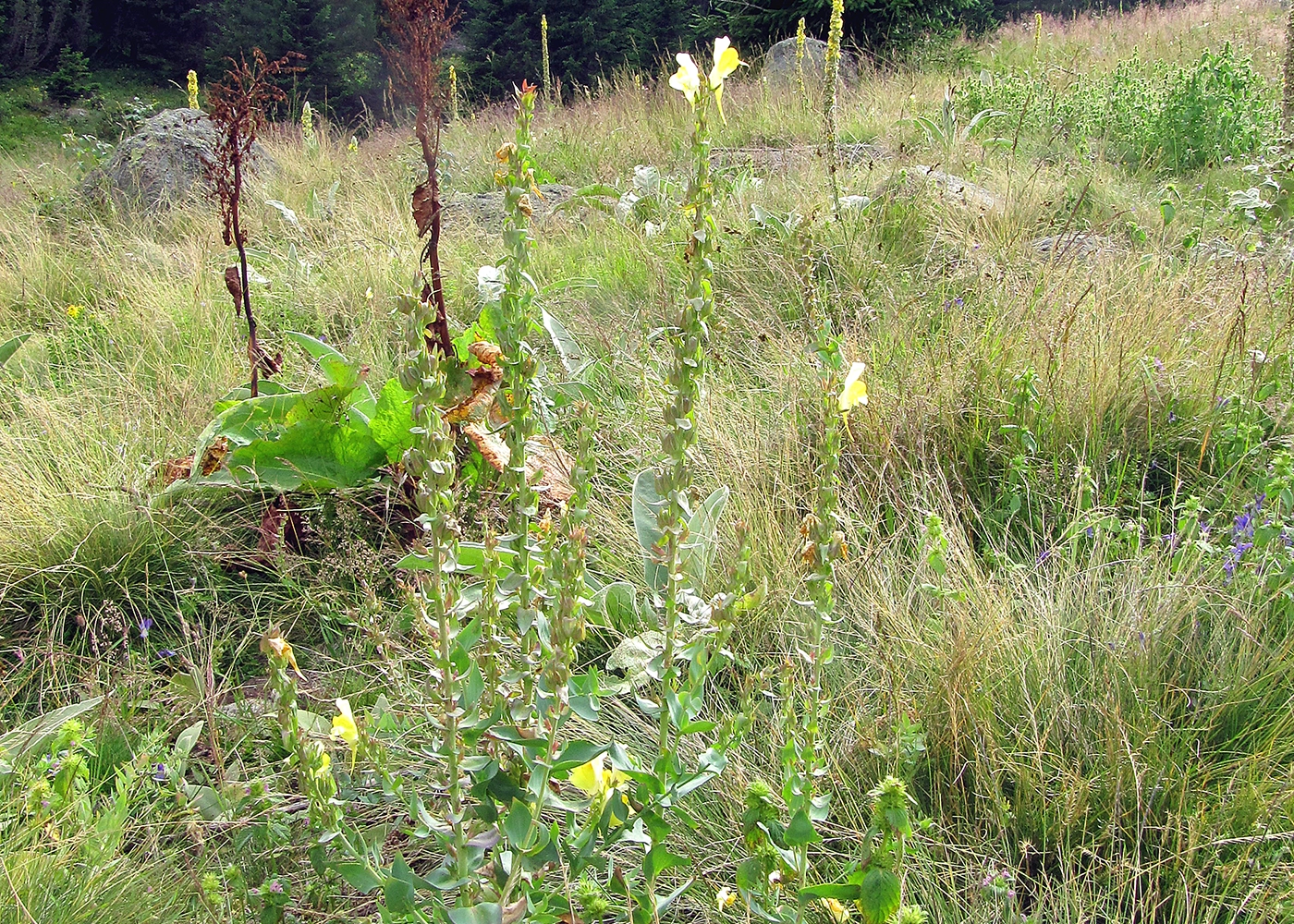
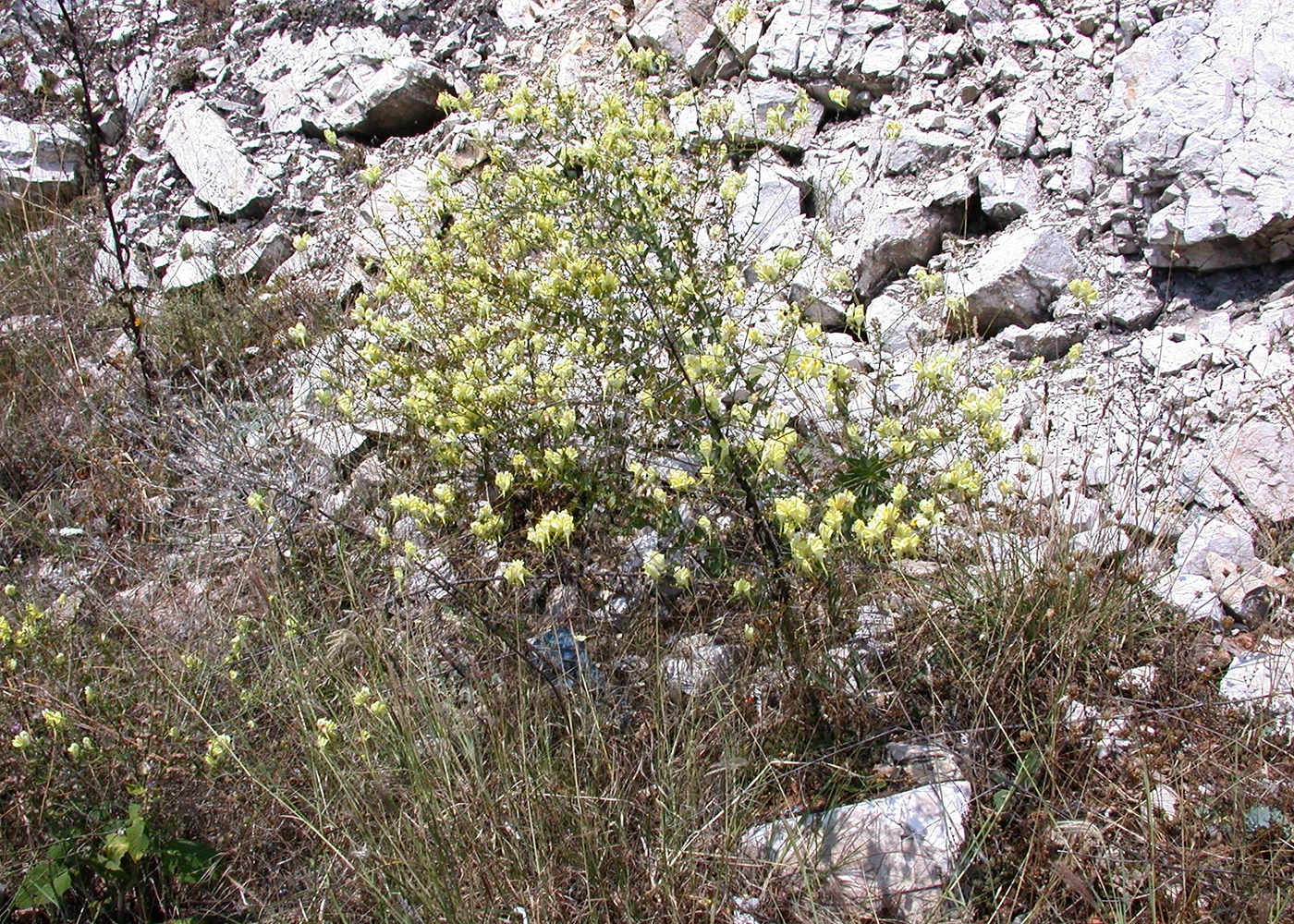
In the example above, Dalmatian toadflax dominated this North American site in the 1990s, exceeding damage thresholds by crowding out native and more desirable species. After releases of Mecinus janthiniformis in 2009, populations of the biocontrol agent increased and, by 2014, reduced toadflax levels below the damage threshold (see graphs below). Reuniting M. janthiniformis with its host brought the infestation closer to levels seen in the plant’s native European range. Although still present, Dalmatian toadflax is no longer a significant economic or ecological concern at this site.
It is important to bear in mind that in the weed’s native range, the weed is a fixed component of the plant community. Because weed biocontrol aims to restore balance between a weed and its natural enemies, eradication is never the goal.
What are the advantages and disadvantages of weed biocontrol?
Although weed biocontrol is an effective and important weed management tool, it does not work in all cases and should not be expected to eradicate the target weed. Even in the most successful cases, biocontrol often requires multiple years before impacts become noticeable. When classical biocontrol alone does not result in an acceptable level of weed control, it should be part of an Integrated Pest Management program incorporating other weed control methods (e.g., physical, cultural, or chemical control).
There are advantages and disadvantages for weed biocontrol as a management tool:
Advantages:
- Target specificity
- Continuous action
- Long-term cost effective
- Gradual in effect
- Generally environmentally benign
- Self dispersing, even into difficult terrain
Disadvantages:
- Protracted time until impact is likely or visible
- Uncertainty over ultimate scale of impact
- Uncertain “nontarget” effects in the ecosystem
- Irreversible
- Not all introduced weeds are appropriate targets
- Will not work on every weed in every setting
What is the typical process for introducing a new weed biocontrol agent?
Classical weed biocontrol begins with identifying specialized natural enemies in a weed’s native range through field surveys and literature review. Promising agents are tested to ensure they target only the weed and are effective, with results reviewed throughout the approval process (see Safety section). Once approved for release in North America, agents are introduced into the field, and release sites are ideally monitored for several years to assess their impact.
- Planning
- Exploration
- Host-specificity testing
- Shipment
- Quarantine (more host-specificity testing)
- Approval process
- Rearing
- Colonization
- Assess establishment
- Evaluate impact
 © Developed by MIA Consulting