
Throughout this website, we use specific terms to describe the life cycle, feeding habits, and distinguishing features of biocontrol agents to aid identification. This page provides definitions and examples of these technical terms. These words are also defined in the Glossary and via cursor-hover definitions.
Most approved biocontrol agents belong to the phylum Arthropoda. More specifically, most are insects (class Insecta) in the orders Coleoptera (beetles), Lepidoptera (moths/butterflies), and Diptera (flies). In addition to insects, there are also mite, nematode, fungi, bacteria, and virus biocontrol agents. Understanding their basic biology and anatomy is essential for identifying species used in weed biocontrol.
Insects
Insects are the largest and most diverse class in the phylum Arthropoda. Most insects used in biocontrol undergo complete metamorphosis, with four life stages: egg, larva, pupa, and adult. In contrast, insects in the orders Hemiptera (true bugs) and Thysanoptera (thrips) have incomplete metamorphosis, lacking a pupal stage. Their young, called nymphs, closely resemble adults. The transformation from nymph to adult primarily involves the development of wings (only in some species) and functioning reproductive organs.
Adult insects have a hard exoskeleton, a segmented body (head, thorax, abdomen), three pairs of legs, and one or two pairs of wings. The head has compound eyes and antennae. Immature insects grow by molting their exoskeletons through larval stages called instars. During the pupal stage, larvae transform into adults without feeding or molting. Adults emerge fully formed and do not grow or molt further.
Beetles (Order Coleoptera)
Beetle larvae are either legless and grub-like or have three pairs of legs near the head. Many are pale white with a dark head capsule and have chewing mouthparts. Beetle pupae have well-developed appendages that are not fused to the body. Adult beetles have chewing mouthparts, hard exoskeletons, and two pairs of wings. The two front wings (elytra) are thickened, forming a protective shell-like covering. The two hind wings are membranous, used for flight, and are folded beneath the elytra when not in use.
Moths and Butterflies (Order Lepidoptera)
Moth and butterfly larvae (caterpillars) have a hardened head capsule, chewing mouthparts, and a soft body; they are active feeders. They have three pairs of true legs near the head and additional leg-like structures (prolegs) farther down the abdomen that anchor the body during movement. The pupal stage may be enclosed in a cocoon or remain exposed, depending on the species. Adults have two pairs of scale-covered wings, prominent antennae, and coiled mouthparts for sipping nectar. Adults of species used in weed biocontrol very little, if at all.
Flies (Order Diptera)
Many insects include “fly” in their names but are not true flies. In true fly names, “fly” appears as a separate word (e.g., house fly) to distinguish them from unrelated insects like dragonflies. True fly larvae, called maggots, are legless and worm-like, and many species pupate inside a hardened larval case called a puparium. Adult true flies are identified by having a single pair of membranous wings and typically soft bodies.
True Bugs (Order Hemiptera)
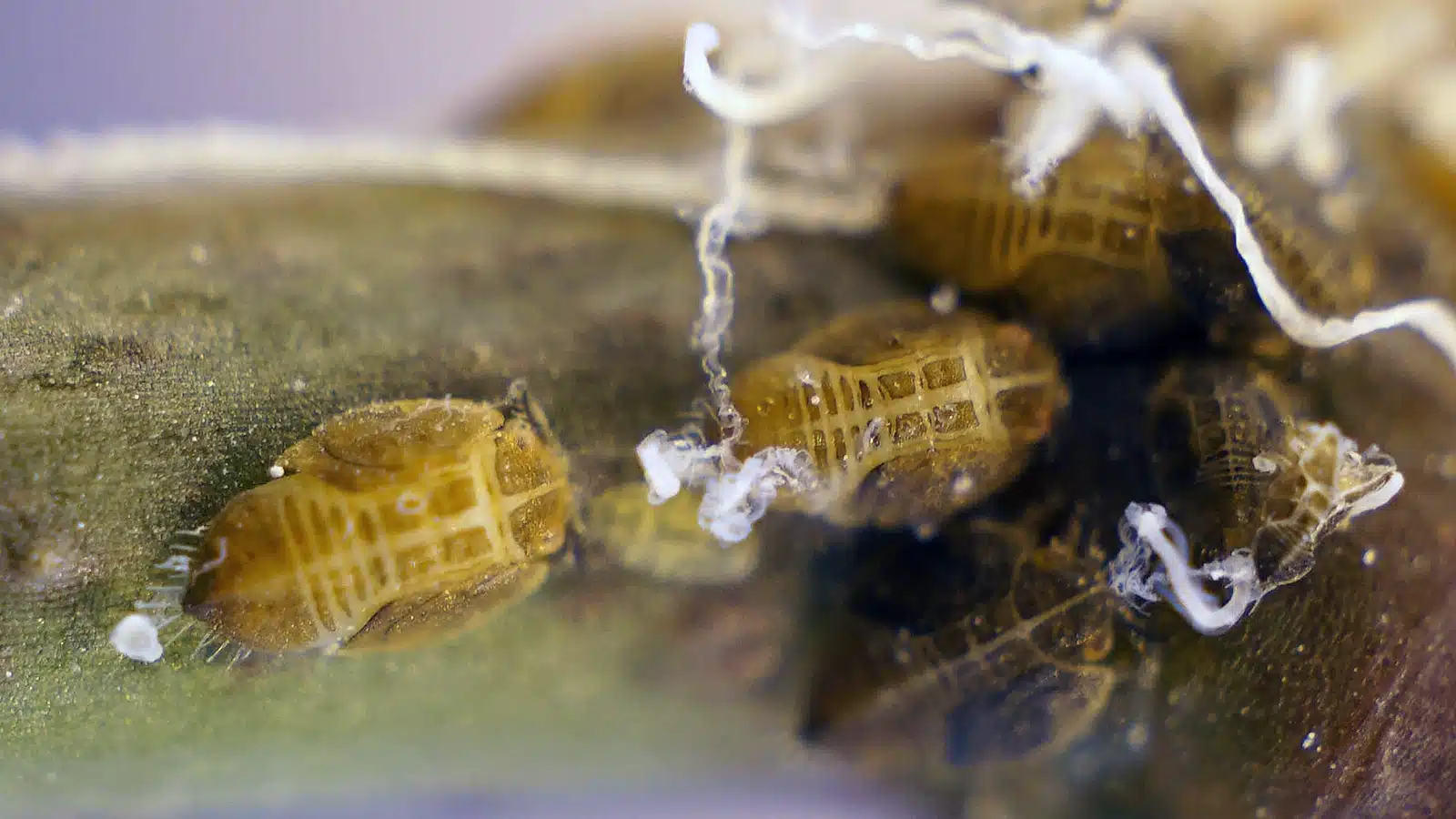
Hemiptera do not have a pupal stage separating larvae and adults as many other insects do. Instead, their young are called nymphs, and they increasingly resemble adults with each instar. Adults of many species have two pairs of membranous, though the forewings may be partly hardened at the base. Some species are wingless. Nymphs and adults possess a piercing, sucking beak used to feed on plant fluids.
Thrips (Order Thysanoptera)
Thrips do not have a pupal stage separating larvae and adults as many other insects do. Instead, their young are called nymphs, and they increasingly resemble adults with each instar. Adults can be wingless or have two pairs of stalk-like wings with long hair fringing the margins. Thrips have two feeding nymphal stages and 2–3 non feeding stages. Both adults and feeding nymphs of plant eating species pierce plant cells and suck out their contents.
Fungi
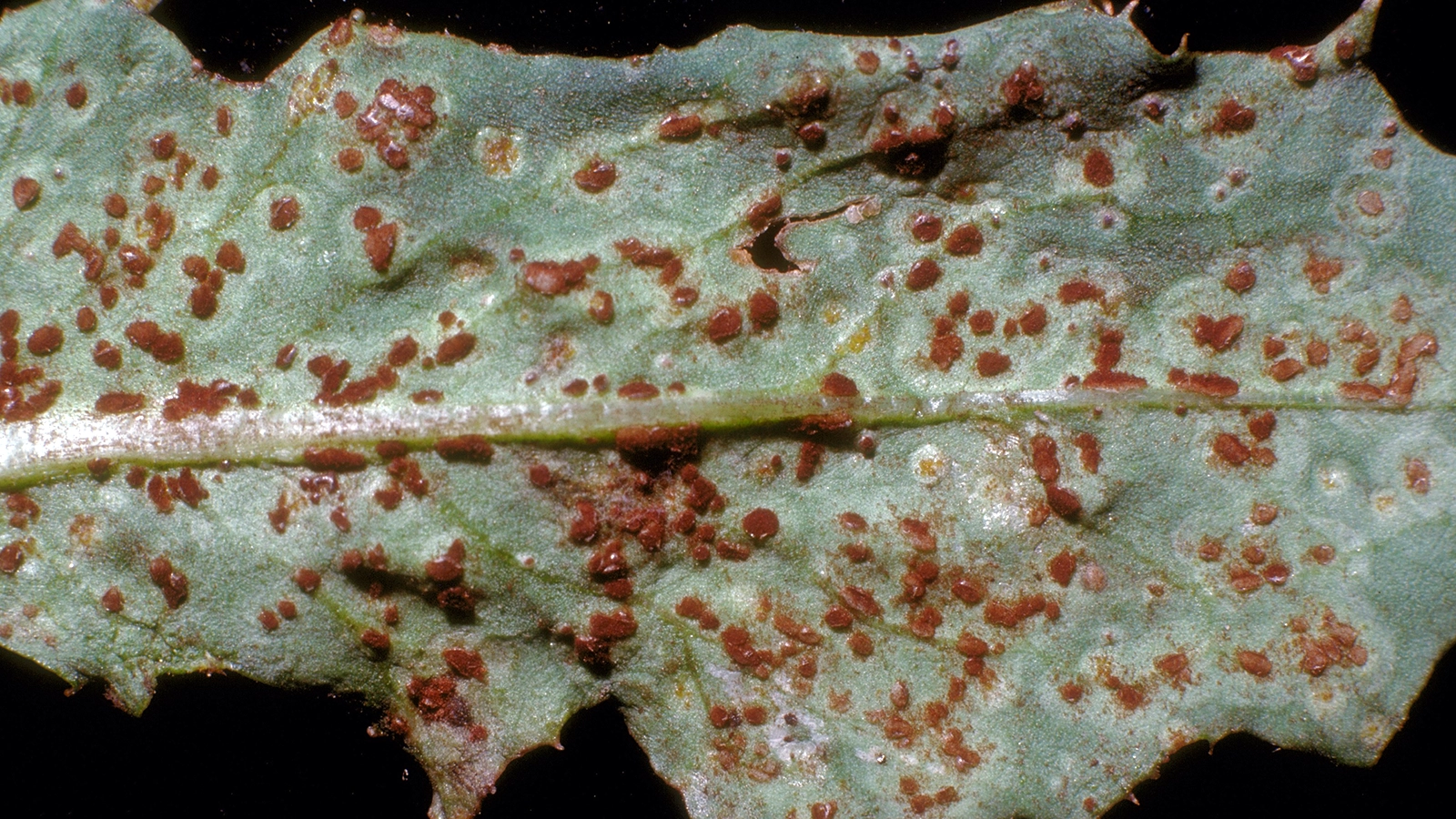
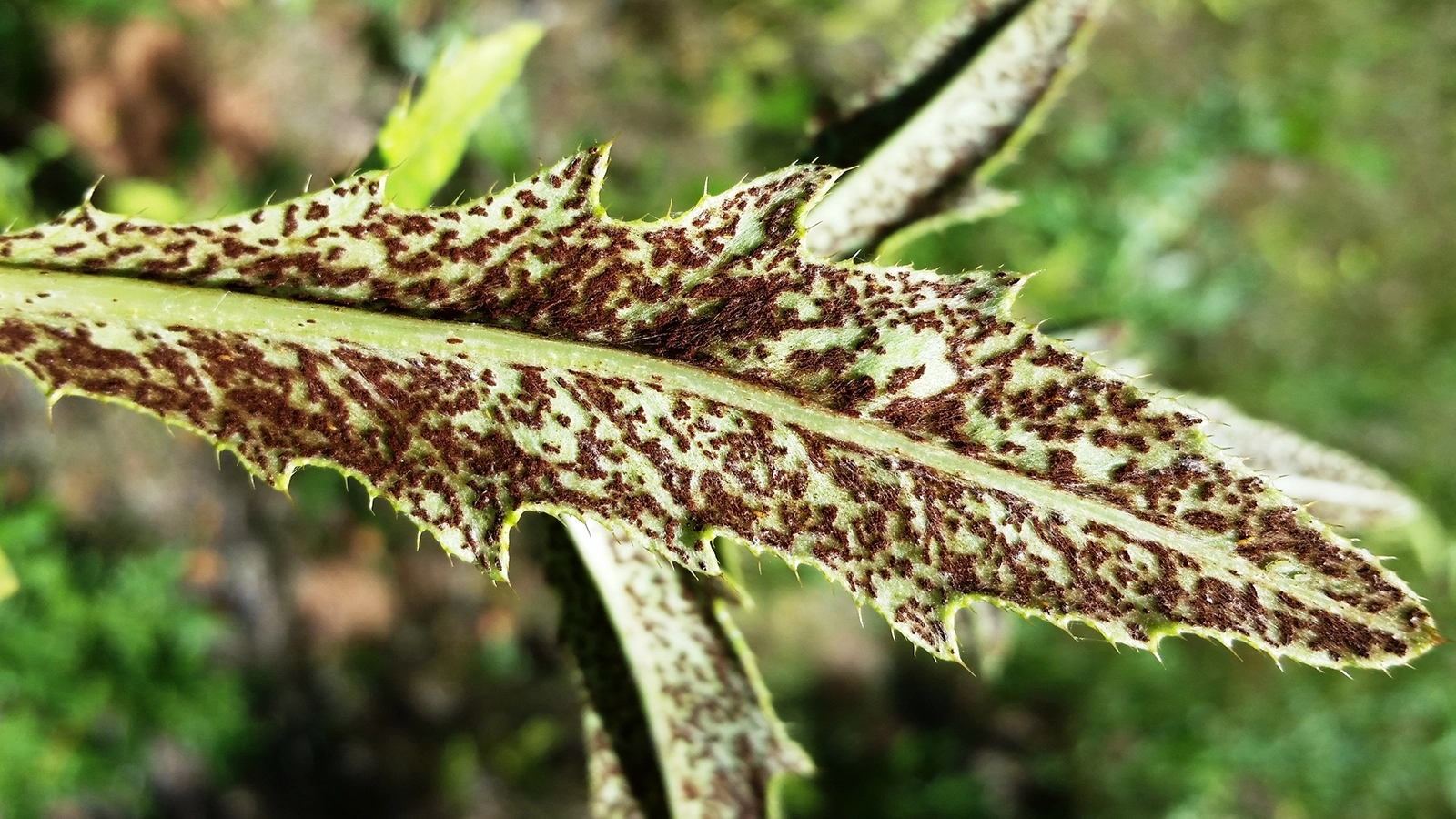
Fungi belong to their own kingdom (Fungi). Most fungi used in North American biocontrol are rust fungi in the phylum Basidiomycota. Rusts are obligate parasites that require a living host to complete their life cycle. They typically infect plant leaves and stems, appearing as rusty orange, yellow, or white pustules that rupture plant tissue and release powdery spores. While most infections remain localized, some spread internally. Rusts disperse mainly by windborne spores, though insects, rain, and animals can also aid transmission.
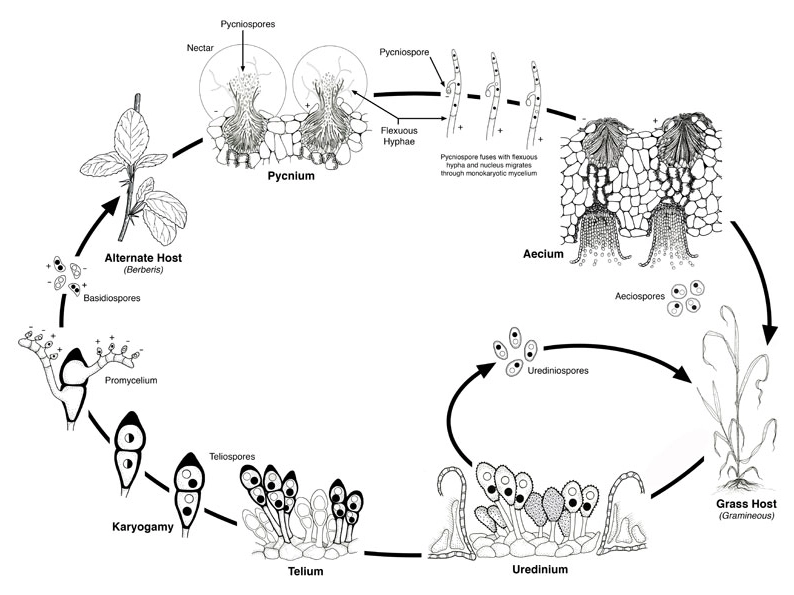
Rust fungi have complex life cycles. They are termed macrocyclic when they produce five spore types. Teliospores usually overwinter in dormancy and germinate in spring to produce basidiospores that infect host plants. Pycnia then form and produce self‑incompatible pycniospores (aka spermagonia), which are cross‑fertilized to generate aeciospores. This stage causes yellow chlorotic lesions that develop into rusty brown pustules producing large numbers of urediniospores. In most species, urediniospores are wind-borne and repeatedly infect plants throughout the growing season. However, in some species, such as Puccinia suaveolens (=P. punctiformis), aeciospores are responsible for local spread. In autumn, infections at the base of shoots often produce teliospores that overwinter.
Mites
Mites, like insects, are arthropods with exoskeletons, but they belong to the class Arachnida, whose adults typically have eight legs. In many species, the first immature stage (called larva) has six legs, while the second immature stage (called nymphs) and adults have eight and resemble each other. Some species lack a larval stage, and some mite families have only four legs. All life stages feed by piercing and sucking cell contents.
Nematodes
Nematodes, or roundworms, are cylindrical, unsegmented animals in the phylum Nematoda, typically 0.1–2.5 mm long. They have a complete digestive system with openings at both ends. Eggs hatch into juvenile larvae that resemble adults but lack mature reproductive systems. Plant‑parasitic nematodes pass through four juvenile stages, often produce 2–3 generations per year, and usually overwinter as juveniles in plant material.

 © Developed by MIA Consulting