Worldwide, some biocontrol agent introductions have resulted in spectacular reductions of their target weeds. In other instances, biocontrol agents have had little to no impact on their target weeds, for a variety of reasons. As discussed in the Managing Expectations section of this website, most biocontrol programs are considered successful when the target weeds are still present but reduced to the point where the damage they cause is below an acceptable threshold. The damage threshold varies considerably based on land use and the goals or the weed management program. In many instances, success with biological control can be improved when combined with other management tools. Below are some examples of North American weed biocontrol programs that have reduced weed impacts below acceptable damage thresholds.
By Judith Hough-Goldstein and Ellen Lake
Mile-a-minute weed, Persicaria perfoliata (Polygonaceae), was accidentally introduced into eastern North America with nursery stock in the 1930s. The vine spread slowly at first, but by the 1990s it was widely distributed in the Mid-Atlantic region, spreading rapidly, and causing considerable concern because of its ability to cover other vegetation, preventing forest regeneration and suppressing native plants. The biocontrol program against P. perfoliata began in 1996, and a permit for release of the host-specific mile-a-minute weevil, Rhinoncomimus latipes (Coleoptera: Curculionidae), was obtained eight years later, in 2004. The weevil shows all the characteristics of a desirable biocontrol agent, including a high reproductive rate, three to four overlapping generations per year in the Mid-Atlantic United States, extreme host specificity, excellent dispersal capability, and the ability to suppress the target weed. No harmful nontarget effects occurred from the weevil’s introduction, and its present and projected benefits are high. Although mile-a-minute weed is still present throughout the invaded area and can sometimes increase to noxious levels, the presence of the mile-a-minute weevil has reduced the weed’s impact on native plants in many areas and, in areas where control of the weed is still needed, the weevil contributes substantially to integrated weed management.
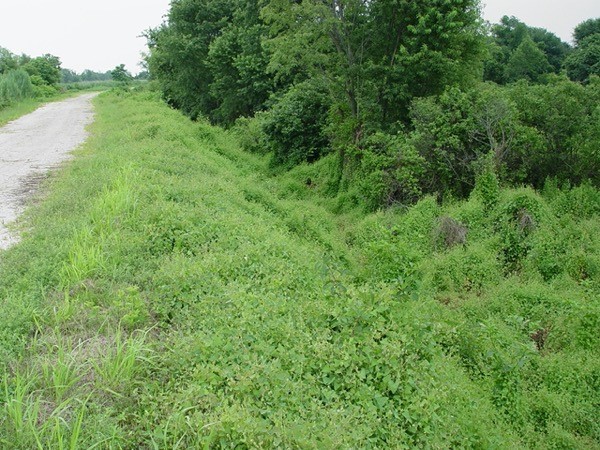

Mile-a-minute weed, Persicaria perfoliata, (a) at the Floodgate Road, New Jersey release site in July 2004 and (b) October 2007 after Rhinoncomimus latipes feeding. Note the Prunus sp. bush in the foreground was not visible before weevil release in 2004 (a), because it was covered by mile-a-minute weed. The Prunus sp. grew once mile-a-minute was reduced. Mark A. Mayer, New Jersey Department of Agriculture.
For more information:
By Natalie M. West and John F. Gaskin
Leafy spurge, Euphorbia virgata (Euphorbiaceae), is a persistent invasive weed causing an expensive management problem that costs U.S. agriculture millions of dollars annually in reduced rangeland productivity and revenue. Chemical control is often only marginally successful, and the repeated applications required carry high economic and ecological costs. In the 1960s, the aggressive spread of leafy spurge led to concerted efforts to develop a biocontrol program against leafy spurge. Because the weed reproduces both by clonal sprouting and substantial seed production, a long-term, low-input control method was required to impose consistent pressure on the plant and reduce leafy spurge populations to acceptable levels. Today, widespread establishment and biocontrol management with Aphthona species of flea beetles (Coleoptera: Chrysomelidae) is a critical component of integrated leafy spurge control across large areas of the western United States.
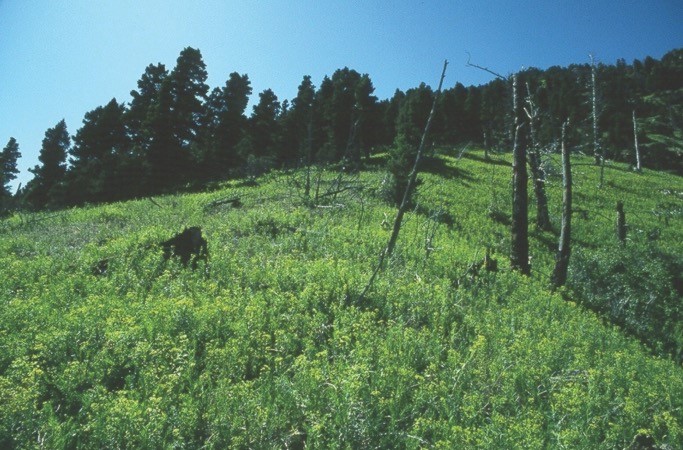
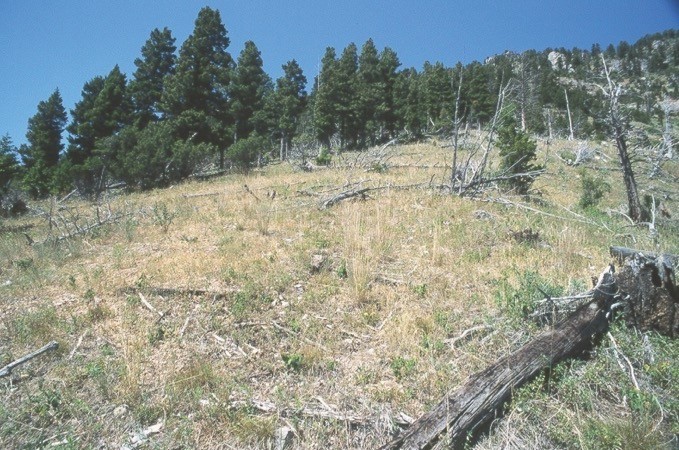
Leafy spurge, Euphorbia virgata, before (left) and after (right) release of Aphthona nigriscutisbeetles in the Bridger Mountains, Montana. USDA ARS TEAM Leafy Spurge.
For more information:
By Sharlene E. Sing, Ivo Toševski, Sarah M. Ward, Carol B. Randall, David K. Weaver, Alexander M. Gaffke, and Robert M. Nowierski
Anecdotal reports indicate that invasive yellow or common toadflax (Linaria vulgaris) and Dalmatian toadflax (Linaria dalmatica) (Plantaginaceae) were deliberately introduced to North America for ornamental purposes. They were also accidentally introduced as a seed contaminant, as was the case for many early-introduced weeds in North America. In the absence of laws regulating the importation of exotic plants (as opposed to plant pests) into the United States, plant-lovers ranging from homesteaders and miners to horticultural enthusiasts imported and shared non-native flora, including toadflax. Widespread co-invasion by both toadflax species in North America resulted in their hybridization, which was first suspected in the early 2000s and later molecularly confirmed in many western U.S. states. Most unintentionally introduced toadflax-specialist insects, as well as the approved toadflax biocontrol agents, were initially thought to exploit both L. vulgaris and L. dalmatica, with preferences for exact toadflax species becoming apparent only after insect establishment in North America. In response to this new understanding of agent specificity, concerted efforts were made to find, evaluate, and release host races or biotypes of previously approved toadflax biocontrol agents. Molecular diagnostics have confirmed the previous introduction of cryptic species, which in turn has explained localized issues with establishment and inconsistent efficacy of agents that, at the time of their introduction, were presumed to attack both L. dalmatica and L. vulgaris. The earliest species introduced for control of toadflax (some flower- or seed-feeding beetles and a defoliating moth) provided minimal control. However, the more recent introductions and establishment of stem-mining insects have significantly suppressed toadflax populations throughout North America, which has resulted in widespread and sustained rangeland improvement, reduced weed management costs, and increased protection of nontarget organisms.
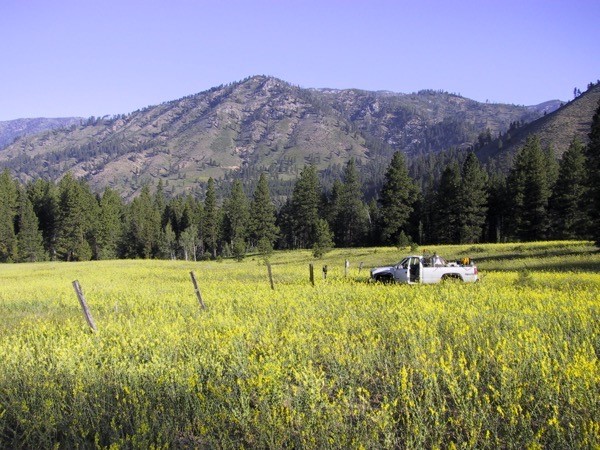
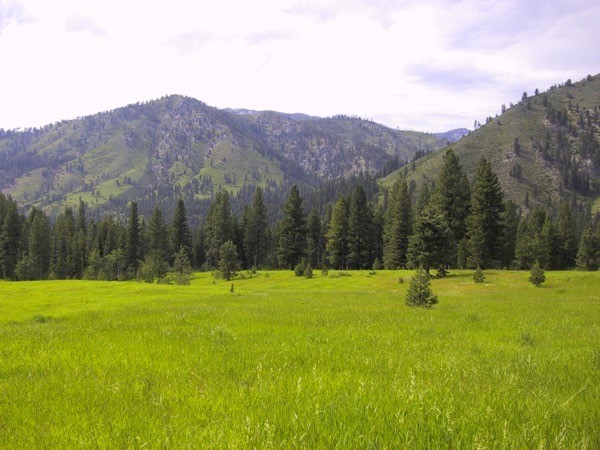
Dalmatian toadflax, Linaria dalmatica, before (2003; left) and after (2010; right) release of Mecinus janthiniformisbeetles in Oster, Idaho. Joseph Milan, USDI BLM.
For more information:
By Stacy B. Endriss, Victoria Nuzzo, and Bernd Blossey
Purple loosestrife (Lythrum salicaria, Lythraceae) is a long-lived forb that has negatively affected North American wetlands for decades. Following the introduction of purple loosestrife from Eurasia in the early 1800s, populations gradually spread across North America, eventually leading to the decline of many native birds, plants, and amphibians. Land managers recognized the widespread ecological harm caused by purple loosestrife and called for sustainable control methods, realizing that traditional methods such as chemical treatments had failed to produce desirable outcomes. In response, research to assess biocontrol options for purple loosestrife began in 1986 in Europe. This biocontrol program represented one of the first times a plant was targeted for biocontrol because of its harm to flora and fauna rather than because of its negative impacts to agriculture. This work led to the release of four host-specific insects: two leaf-feeding beetles (Galerucella calmariensis and Galerucella pusilla; both Coleoptera: Chrysomelidae) and a root-feeding weevil (Hylobius transversovittatus; Coleoptera: Curculionidae) in 1992, followed in 1994 by a flower-feeding weevil (Nanophyes marmoratus; Coleoptera: Curculionidae). The Galerucella leaf-feeding beetles now appear to be widely established and abundant. Data on the abundance and distribution of the root-feeding and flowering-feeding weevils remain sparse. The effect of these insects may vary from site to site, but in many regions across North America, such as the Pacific Northwest, the Great Lakes Region, and the Northeast, biocontrol of purple loosestrife is now highly effective and economical. For example, long-term data collected from New York document that these insects reduce the density, height, and flower production of purple loosestrife, which in turn allows an increase in native plant diversity. This is the ultimate goal of weed management. Many biocontrol success stories are anecdotal, and purple loosestrife is one of the first examples for which we have strong evidence that control of weeds by insects can result in native plant recovery.
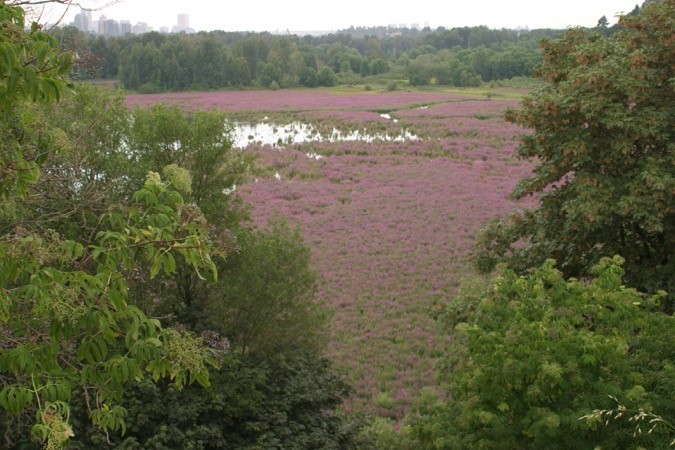
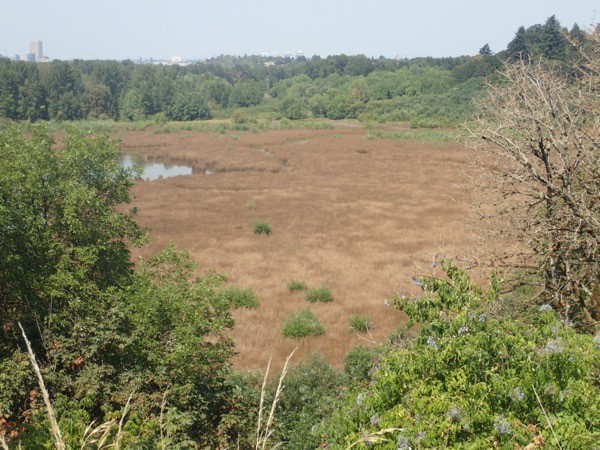
Purple loosestrife, Lythrum salicaria, before (2007; left) and after (2010; right) release of Galerucella spp. beetles in Oregon. Colin Park, USDA APHIS PPQ and Marc Peters, City of Portland.
For more information:
By Melissa C. Smith
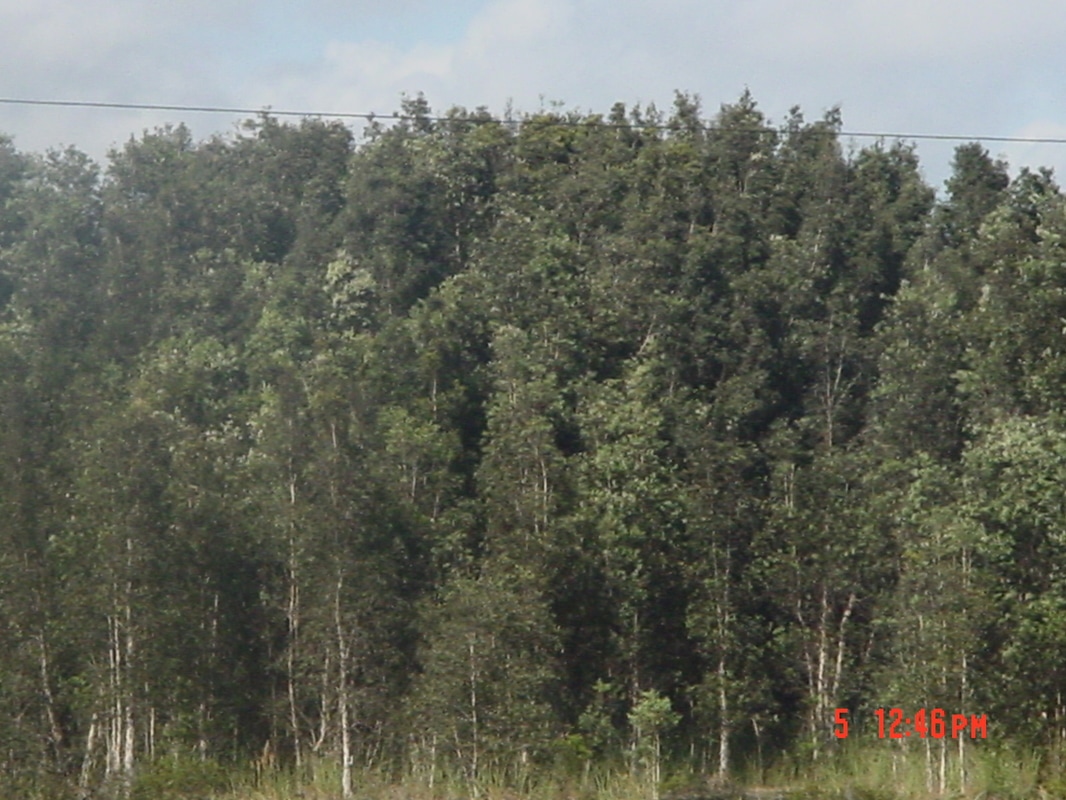
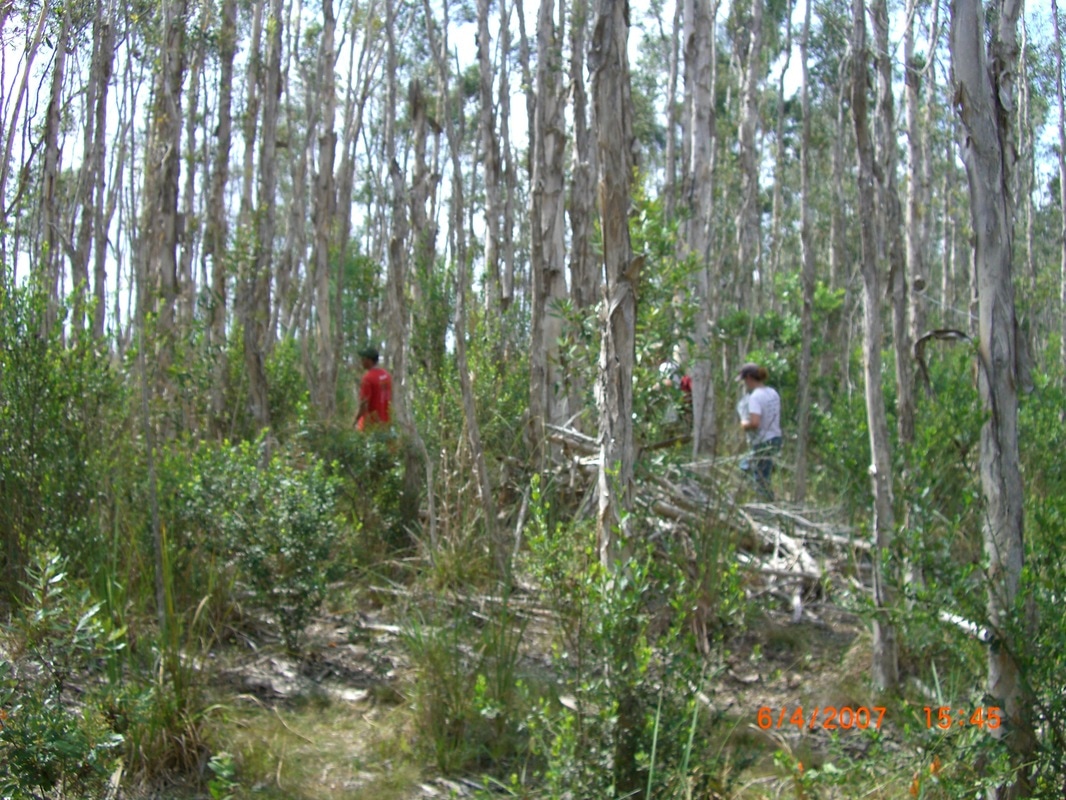
Non-native plant invasions are often the result of intentional introductions through the horticulture trade. Beginning in the early 1800s, extensive effort was made to explore the world in search of plants for use in ornamental horticulture. Melaleuca quinquenervia (Myrtaceae) is one such plant that was brought into south Florida beginning in 1886 for use as a landscape tree. During the next fifty years (1905–1955), M. quinquenervia (or melaleuca) was used to reforest edges of swamps where cypress and pine had been removed by settlers, planted extensively in urban settings, used to stabilize dikes for large U.S. Army Corps of Engineers projects, and seeded from planes in an attempt to make Florida wetlands more hospitable for development. Gradually, however, the landscape melaleuca was invading, especially in the Everglades which became an icon for imperiled North American ecosystems. Soon thereafter in the 1960s, Florida and the federal government began large-scale efforts to preserve this unique subtropical wetland. A major cause of the degradation of the Everglades was the invasion of plant species, especially melaleuca, but also others such as Brazilian pepper tree (Schinus terebinthifolia), Old World climbing fern (Lygodium microphyllum), and air potato (Dioscorea bulbifera). Over the past forty years or so (1980–2022), extensive efforts to introduce biocontrol agents against melaleuca (to reduce further expansion and prevent regrowth by limiting reproduction) and to integrate those agents with mechanical and chemical removal reduced the size of the melaleuca-dominated area from 400,000 ha (988,000 acres) to less than 100,000 ha (247,000 acres). Melaleuca control is currently in a maintenance mode in south Florida. Fire appears to spur new seedling recruitment events, but most large, mature stands are dwindling or have been treated and have not returned due to the ability of biocontrol agents to drastically reduce recruitment of new seedlings.
Melaleuca, Melaleuca quinquenervia, before and after release of biocontrol agents in South Florida. Note fallen melaleuca trees due to defoliation, dieback, shrunken root mass, open canopy, and migration of new species in the understory.
For more information:
By Min B. Rayamajhi and F. Allen Dray Jr.
The air potato vine (or air yam), Dioscorea bulbifera, a member of the Old-World yam family (Dioscoreales: Dioscoreaceae), was introduced to the United States over two centuries ago and has become one of the most serious exotic invasive weeds in Florida. It vigorously invades disturbed and undisturbed habitats under public and private ownership across Florida, southern Georgia, Alabama, Mississippi, Louisiana, and Texas. Research shows the vine grows up to 25 cm (9 in) per day and branches profusely. These attributes enable air potato to climb up and over other vegetation, smothering trees, shrubs, and understory plants. It produces numerous aerial tubers (known as bulbils) as it grows, which fall to the ground when the vines die back in winter. The bulbils and underground tubers sprout in spring and repeat the seasonal growth cycle. Herbicidal, mechanical, and cultural methods used by land managers are costly, provide only temporary relief, and can cause damage to nontarget plants in the area. In contrast to chemical controls, biocontrol agents offer a self-sustaining, environmentally friendly, and cost-efficient method for managing this weed. A biocontrol program against air potato was started in 2002 after a leaf feeding beetle, Lilioceris cheni (Coleoptera: Chrysomelidae), from air potato’s native range in Nepal was accidentally discovered. Later, the same beetle was discovered in China. Extensive testing at the USDA ARS Invasive Plant Research Laboratory in Fort Lauderdale, Florida showed that Nepalese and Chinese beetles are highly specific, so federal and state regulatory agencies approved their release in the United States. Adults and larvae feed on air potato leaves, ultimately causing vines to die early and significantly reducing bulbil production. The beetles are relatively less effective at controlling air potato vines in urban and suburban areas, where mosquito spraying programs interfere with the beetles’ life cycle. Still, they are very effective in rural areas, federal, state, and local parks, and other natural areas with no or limited spraying.

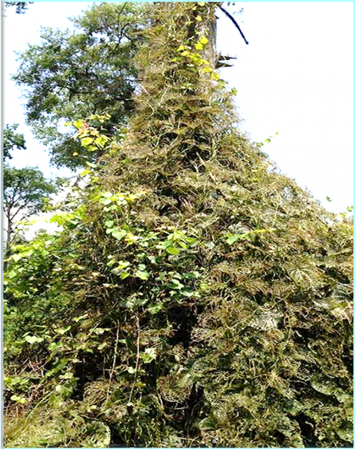
Air potato, Dioscorea bulbifera, before (left) and after (right) release of Lilioceris cheni in South Florida. In the image at right, L. cheni has caused severe defoliation of the D. bulbifera vines engulfing the bottom portion of a large tree; note emergence of new growth of Vitis species following severe defoliation of air potato by beetle larvae and adults. Min B. Rayamajhi, USDA ARS.
For more information:
By Alexander M. Gaffke, Tom L. Dudley, Daniel W. Bean, Gail M. Drus, Matthew J. Johnson, Allen E. Knutson, David K. Weaver, Sharlene E. Sing, Bruce K. Orr, and David C. Thompson
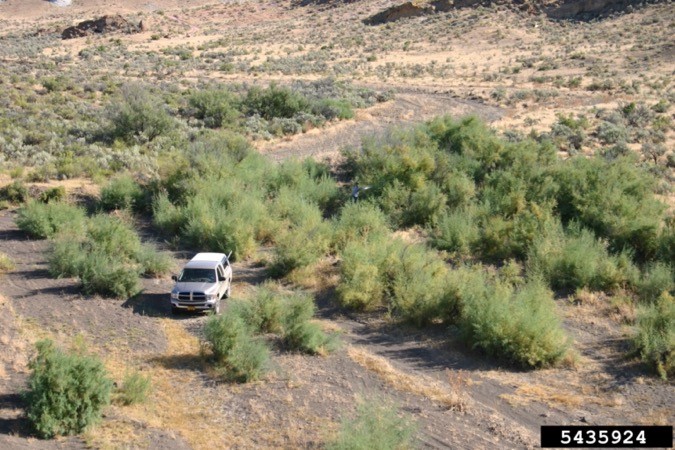
The biological control program against Tamarix spp. (tamarisk/saltcedar; Tamaricaceae) was initiated in the 1970s to reduce negative impacts of this invasive Old World shrub to riparian biodiversity and ecosystem function in western North America. Field releases of host-specific leaf beetles (Chrysomelidae) in the genus Diorhabda were initiated in 2001, with significant establishment and widespread defoliation observed roughly two years after open releases. What followed were a variety of complex interactions among invasive Tamarix, its guild of herbivores including Diorhabda spp., and the physical and biotic environment, which varied across the western U.S. project area. Defoliation yielded sustained lower evapotranspiration and opened canopies, allowing increases in desired vegetation in some areas, while in other areas beetle establishment failed for reasons that included less-suitable host species, mismatches of environmental cues with diapause development of the beetle, and predation by generalist insectivores. In some regions, such as Texas, agent populations were short-lived, resulting in lack of sustained Tamarix suppression. In other areas, beetle populations reached initial epidemic densities but then declined to moderate levels with patchy subsequent defoliation and diminished target mortality. These short-term dramatic impacts to invasive Tamarix, but limited sustained control, suggest potential value in releasing additional host-specific agents, some of which have already been studied and readied for petitioning for release.
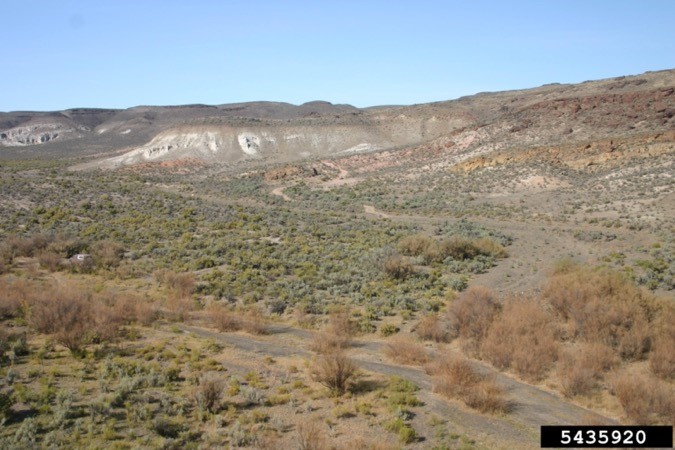
Saltcedars, Tamarix spp., before and after release of Diorhabda spp. in Oregon.
For more information:
By Melissa C. Smith
Waterhyacinth, Pontederia [Eichhornia] crassipes (Pontederiaceae), is an invasive floating plant that causes environmental and economic damage outside its native range in the Amazon Basin, including in Florida where it was introduced by the late 1800s. Following the implementation of wide-scale herbicide applications in the mid-1950s, coverage of waterhyacinth declined in Florida, but the plant was not eliminated. Herbicides are costly, requiring regular re-application and sustained funding to maintain suppression. Consequently, a biological control program was initiated in the 1960s, resulting in the eventual release of four biocontrol agents in the USA, including Megamelus scutellaris, Neochetina eichhorniae, Neochetina bruchi, and Niphograpta albiguttalis. Although these biological control agents have reduced many of the more invasive qualities of this plant by slowing vegetative growth and significantly reducing seed production, surface coverage in the field remains unacceptably high in many areas. More recently, studies are showing that biocontrol agents can reduce the rate and frequency of herbicide applications necessary to control this weed, and the combination of insects and reduced herbicides is proving effective in Florida.
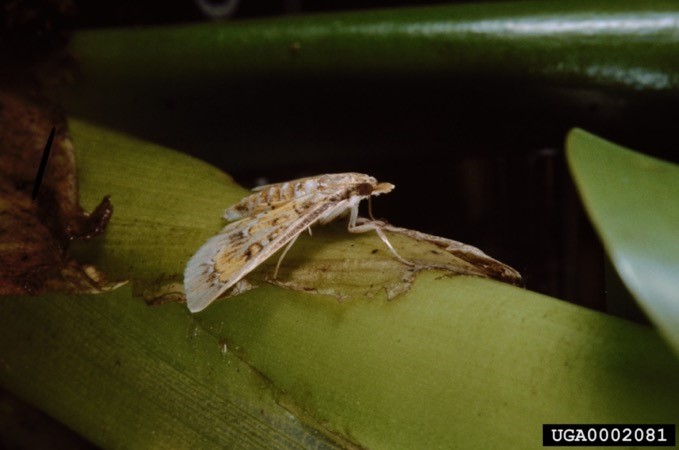
Waterhyacinth biocontrol agents.
For more information:
Modified from Don Gayton, Val Miller, Rob S. Bourchier, and Brian H. Van Hezewijk
Diffuse knapweed, Centaurea diffusa (Asteraceae), has historically caused substantial economic losses in rangelands in many parts of British Columbia’s southern interior. Beginning in 1970, the provincial government initiated a long-term knapweed biological control program, introducing 12 different biocontrol agents against C. diffusa and its close relative spotted knapweed, C. stoebe subsp. micranthos. Since the establishment of this program, widescale reductions of C. diffusa populations have been documented in British Columbia, which have largely been attributed to a combination of the seedhead and foliage-feeding weevil Larinus minutus and the root-feeding weevil Cyphocleonus achates. A decline in C. diffusa cover was followed by an increase in the presence of native plant species but also non-native grasses. The return on investment for biocontrol of C. diffusa in British Columbia has been estimated at $17 for each dollar spent.
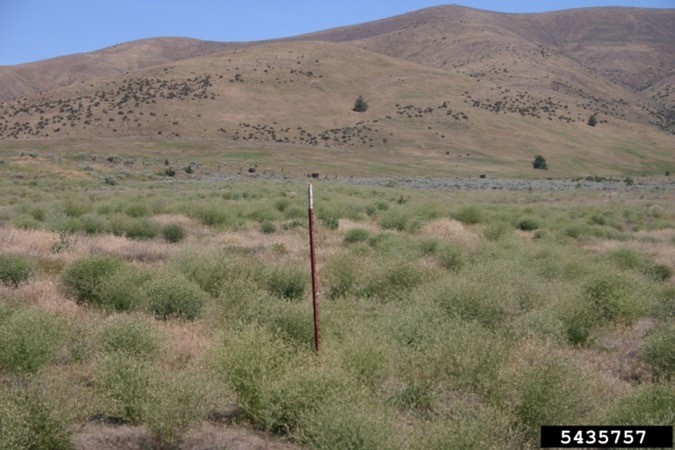
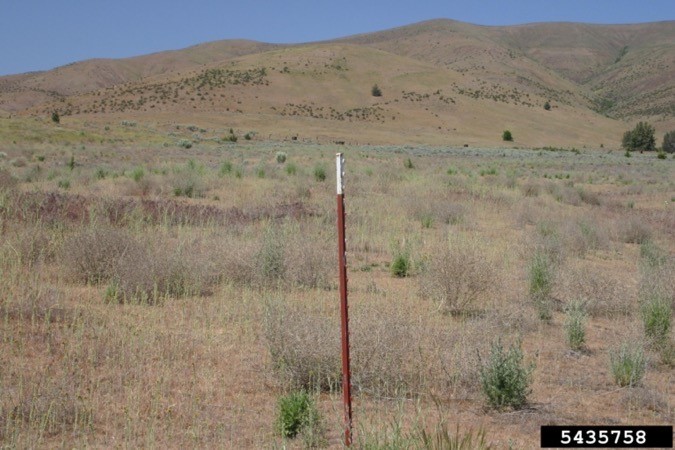
Diffuse knapweed, Centaurea diffusa, before (left) and after (right) release of biocontrol agents (especially Larinus minutus) in Oregon. Eric Coombs, Oregon Department of Agriculture, Bugwood.org.
For more information:
By Rachel Winston
Tansy ragwort, Jacobaea vulgaris (=Senecio jacobaea) (Asteraceae), is native to Europe, Siberia, and Asia. It was likely introduced to eastern North America in the 1850s in contaminated ship’s ballast. By the early 1900s, tansy ragwort had invaded port regions along the western coast. It soon spread inland via contaminated animal feed, logging equipment, and other human-mediated avenues. In the 1970’s, the weed infested more than 9 million acres (3.6 million ha) in the state of Oregon alone. Though it has been reported in 20 states and 10 Canadian provinces, tansy ragwort is most problematic in western North America where it displaces native species in natural areas and reduces range and pasture production. All parts of the plant contain pyrrolizidine alkaloids that are responsible for livestock fatalities, contaminating milk production, and the tainting of honey made from tansy ragwort nectar, and many people are also allergic to this weed. A biocontrol program was initiated against tansy ragwort in the 1950s, resulting in the release of three biocontrol agent species in the USA and an additional moth in Canada. Although the weed can still be problematic at some sites, tansy ragwort populations have decreased at many locations throughout the northwestern USA, and the bulk of this success is attributed to two of the biocontrol agents. High densities of the moth Tyria jacobaeae often completely defoliate plants. In regions with mild climates, the weed often re-grows and recovers sufficiently to successfully overwinter and reproduce. In the colder, harsher Intermountain West, frost usually kills regrowth before plants fully recover, so the moth is more effective at reducing weed populations. Moth populations in mountain habitats have demonstrated rapid evolution, aiding their persistence in short growing seasons and increasing their effectiveness. In the northwestern USA, the flea beetle Longitarsus jacobaeae has proven the most consistently effective biocontrol agent of tansy ragwort. An Italian strain of this beetle is established in high numbers at low-elevation coastal locations (as well as a few high-elevation inland sites) where it has reduced tansy ragwort densities by over 90% at numerous sites. A Swiss strain of L. jacobaeae has proven better suited to climates where the Italian strain does poorly (inland, colder regions with heavy snowpack). The Swiss strain has reduced tansy ragwort population densities by ~50% at many sites. The Italian and Swiss strains are forming hybrids at some sites in Montana. There, hybrid populations are larger and cause increased mortality of larger tansy ragwort plants compared to populations made of pure strains. Both strains of L. jacobaeae work well in conjunction with T. jacobaeae.


Tansy ragwort, Jacobaea vulgaris, infestation (left) before and (right) nine years after tansy ragwort flea beetle releases in Oregon. Eric Coombs, Oregon Department of Agriculture, Bugwood.org
For more information:
By Rachel Winston
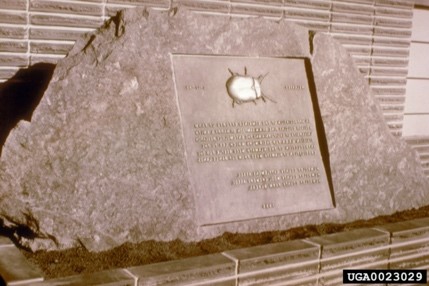
Common St. Johnswort, Hypericum perforatum (Hypericaceae), is a perennial forb native to Europe, northern Africa, and Asia. It has a long history of use in herbal remedies for mild to moderate depression, chronic fatigue syndrome, healing wounds, suppressing coughs and as an antiviral agent. As such, it was intentionally introduced to numerous countries on multiple occasions by European settlers interested in the plant’s medicinal properties. In many countries where it was introduced, the plant escaped cultivation and became a nuisance weed. In the USA, common St. Johnswort is a vigorous competitor in pastures, rangelands, and natural areas, displacing desirable forage as well as native species. It is also toxic to livestock, producing the phototoxin hypericin which causes photosensitization and liver damage. Affected animals often become emaciated from starvation and dehydration, and photosensitive sheep produce poor quality wool. At its peak abundance in California, common St. Johnswort was considered the leading cause of economic loss, attributed both to the loss of pastures and rangelands and to stock fatalities. A biological control program was initiated in the USA in the 1940s, resulting in the release of six biocontrol agents. Of the five species that established, the most successful agents are the leaf beetles Chrysolina quadrigemina and C. hyperici. Larvae and adults of both beetles feed on common St. Johnswort foliage, and repeated defoliations destroy plants. In combination, these beetles have greatly assisted control of open infestations and can cause extensive defoliation over wide areas. In California, these beetles were so effective at reducing common St. Johnswort infestations, this program became one of the most famous examples of a classical biological control success story. Grateful landowners even erected a monument in honor of the beetles that saved their rangelands, and the weed is still considered under complete control in California, over 75 years later. However, the beetles are not well adapted to shade and high summer rainfall—areas where common St. Johnswort plants frequently recover from defoliation. While the largest invasions in the continental USA were controlled within 10 years of the beetles’ introduction, invasions at cooler, more moist sites have persisted, although their overall extent is significantly less than historical levels.


Common St. Johnswort, Hypericum perforatum, invasion in California before (left) and after (middle) Chrysolina spp. introductions. USDA ARS European Biological Control Laboratory, Bugwood.org.
For more information: